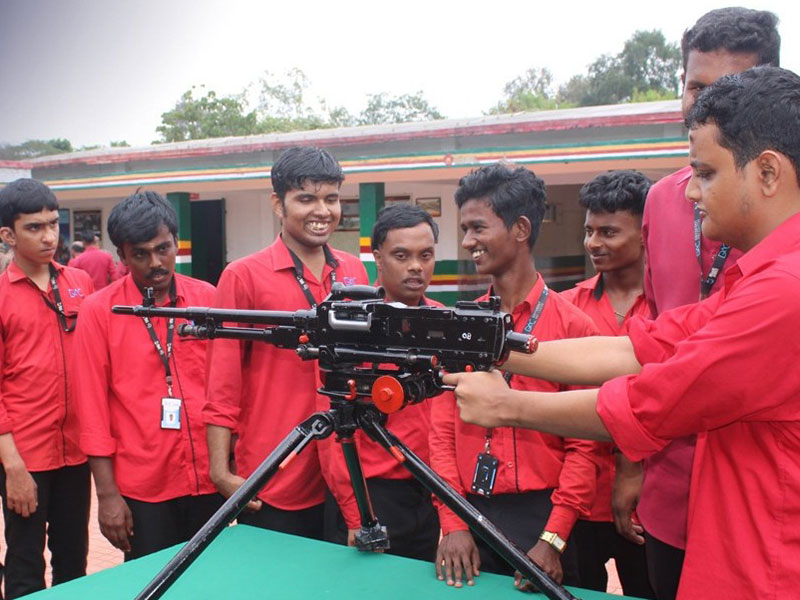
Thiruvananthapuram:The Different Art Centre (DAC), founded by magician and disability advocate Gopinath Muthukad, is an innovative and transformative institution that uses art as a scaffold for neurodivergent development, agency, and social inclusion. By training children in disciplines such as magic, dance, music, painting and sports, DAC doesn’t simply offer a creative outlet - it provides a scientifically grounded path for building self-regulation, cognitive resilience, and meaningful identity.
Neurodivergent individuals - including those on the autism spectrum, with cerebral palsy, intellectual disability, ADHD (attention deficit hyperactivity disorder) or other developmental differences - often face systemic barriers that go beyond infrastructure. Traditional educational or therapeutic frameworks may address their sensory and emotional needs, but their social needs are seldom addressed. This is where structured arts training and the provision for showcasing their talents become a powerful intervention.
To appreciate DAC’s transformative force, it helps to understand the scale of the challenge. According to national data from the 2011 Census, approximately 2.21% of India’s population is recorded as having a disability. While this figure may under-represent the true number - given survey limitations and stigma - it nonetheless represents tens of millions of people. In Kerala, the percentage is slightly higher: census data shows 2.28% of the population is disabled, amounting to 761,843 persons, including a variety of impairments such as visual, hearing, intellectual, and mental illness.
Neurodevelopmental disorders (NDDs) — such as autism spectrum disorder, ADHD (attention deficit hyperactivity disorder), learning disabilities and epilepsy — are often regarded as niche concerns. But in Kerala, the need is far from marginal: a two phase, door to door study in Kottayam district, carried out between 2020 and 2022, surveyed 26,465 individuals and found an overall NDD prevalence of 0.80 percent, rising to 1.38 percent among children under 12. These findings were published in the Annals of Neurosciences.
On a national scale, the picture is equally urgent. A 2023 cross sectional study in Neurology India screened 29,680 children under India’s Rashtriya Bal Swasthya Karyakram (RBSK) programme. The authors estimated a neurodevelopmental disorder prevalence of 16.64 per 1,000, or roughly 1.66 percent.
Even more telling is how these numbers intersect with socio economic realities. A 2021 report on persons with disabilities in India noted that although nearly a third of individuals with disabilities are employed, the employment rate among women with disabilities is significantly lower than men.
And in Kerala - where literacy is high across the board - people with disabilities also enjoy relatively higher literacy: around 70.8% of the differently abled population in Kerala is literate, according to the same report.
Such data also highlight a significant but often overlooked public health priority. By any measure, many children in India grapple with cognitive and social differences. In many communities, conventional services for identification and support fail to reach or meaningfully engage children with NDDs - particularly those who might not fit a one-size-fits-all treatment model.
This is where DAC’s work becomes not only culturally inspiring but deeply necessary.
A key early initiative, the Mpower programme - neurodivergent individuals learning magic and performing in front of live audiences - began in 2017 under the Magic Academy, which later evolved into the Different Art Centre. An independent evaluation by the Child Development Centre (CDC) of the Government of Kerala found that Mpower produced significant benefits for participating children and their families. The CDC report showed improvements in mental health status and social development among children engaged in the programme, which used magic and life skills as tools for empowerment.
The CDC evaluation recommended that similar arts-based programmes be scaled to reach more differently abled children. This endorsement catalysed the creation of the comprehensive Different Art Centre at Kazhakkuttom, Thiruvananthapuram, where the scope was broadened from magic to include vocal and instrumental music, dance and painting along with sports.
DAC’s curriculum is organised across seven distinct “stages,” each dedicated to a different art form: drama (India Fort), music (Beethoven Bungalow), dance (Jaleo Mahal), painting and visual arts (Angelo’s Artree), magic and illusion (Wonder Wings), and life skills (Different Thought Centre).
This architecture is not arbitrary. It reflects a neuro-affirmative pedagogy, where children are encouraged to develop in the art form that resonates most with their cognitive and sensory profiles, instead of being forced into the same mould.
DAC’s impact is already measurable. In May 2025, the centre welcomed its fifth cohort of students, selected from more than 1,000 applications across Kerala. The new learners will receive comprehensive training - alongside therapeutic services, sports integration, and psychological support - in a holistic curriculum designed for long-term development.
On the vocational front, DAC’s IMAGE (Initiative for Mentoring Graphics & Editing) programme, conducted in partnership with Toonz Academy, is equipping neurodivergent youth with employable digital skills. Since 2024-25, 38 students (batch strength of 19 each per year) completed the intensive eight - month training in graphic design and video editing - with some going on to find work and independence.
DAC’s work is recognized at the highest levels. It has received ISO certification for maintaining international standards in care, training, and infrastructure. It has also drawn acclaim from government bodies and NGOs both nationally and internationally: its model is being studied for replication in other states.
Dr. Anil Kumar Nair, Director - Intervention, DAC and former Head of the Department of Psychology at the Institute for Communicative and Cognitive Neurosciences (ICCONS), brings a depth of clinical and academic expertise to DAC’s intervention programmes. With extensive experience in neurodevelopmental disorders, neuropsychology, and therapeutic interventions, he frames DAC’s arts training as an evidence-based neurobehavioral approach.
“When we teach magic or dance,” he says, “we are doing more than imparting a performance skill. We are constructing a structured neuro-behavioural framework - a scaffold through which children learn self-regulation, articulate internal conflicts, and gradually navigate their world with agency.”
Elaborating, he says, "We apply performing arts as structured neurodevelopmental interventions targeting executive function, emotional regulation, motor planning, and social cognition. Activities such as magic and dance, engage and strengthen neural circuits often affected in neurodivergent children. Complex motor learning enhances working memory and fine motor skills, while group performances foster vital social skills. The induced creative flow states reduce stress hormones like cortisol, improving attention and emotional control, all contributing to neuroplasticity and enhanced autonomy."
This integration of clinical neuroscience with art pedagogy ensures DAC’s interventions are evidence-based and aligned with best practices in neurorehabilitation
Gopinath Muthukad, Executive Director, DAC, and a globally recognized magician, passionately champions social inclusion for differently abled individuals, say, "Magic has been more than my art; it's a message of transformation and possibility. At DAC, we harness magic and the arts to dismantle social barriers, giving children not just skills but the dignity of belonging and recognition. This is not charity - it is an assertion of capability and human rights."
Muthukad also leads initiatives like the MAGIK Homes Project (launched 2024), providing accessible, customized housing for marginalized differently-abled individuals to promote independence and dignity.
In a world where neurodivergent people are often seen through the lens of deficit, DAC stands out for championing ability, creativity and dignity. Its model marries rigorous artistic training with clinical insight, turning what many might dismiss as therapy into deeply meaningful education.
Building on its success, DAC is expanding with the International Institute for People with Disabilities (IIPD) in Kasaragod. This institute will provide broader art-based training, therapeutic services, and life-skills education, further empowering differently-abled individuals.
If DAC is a proof of concept, then the IIPD could be its amplification - a national-scale institution that proves art is not just a respite for neurodivergent individuals, but a foundation for their fullest development.
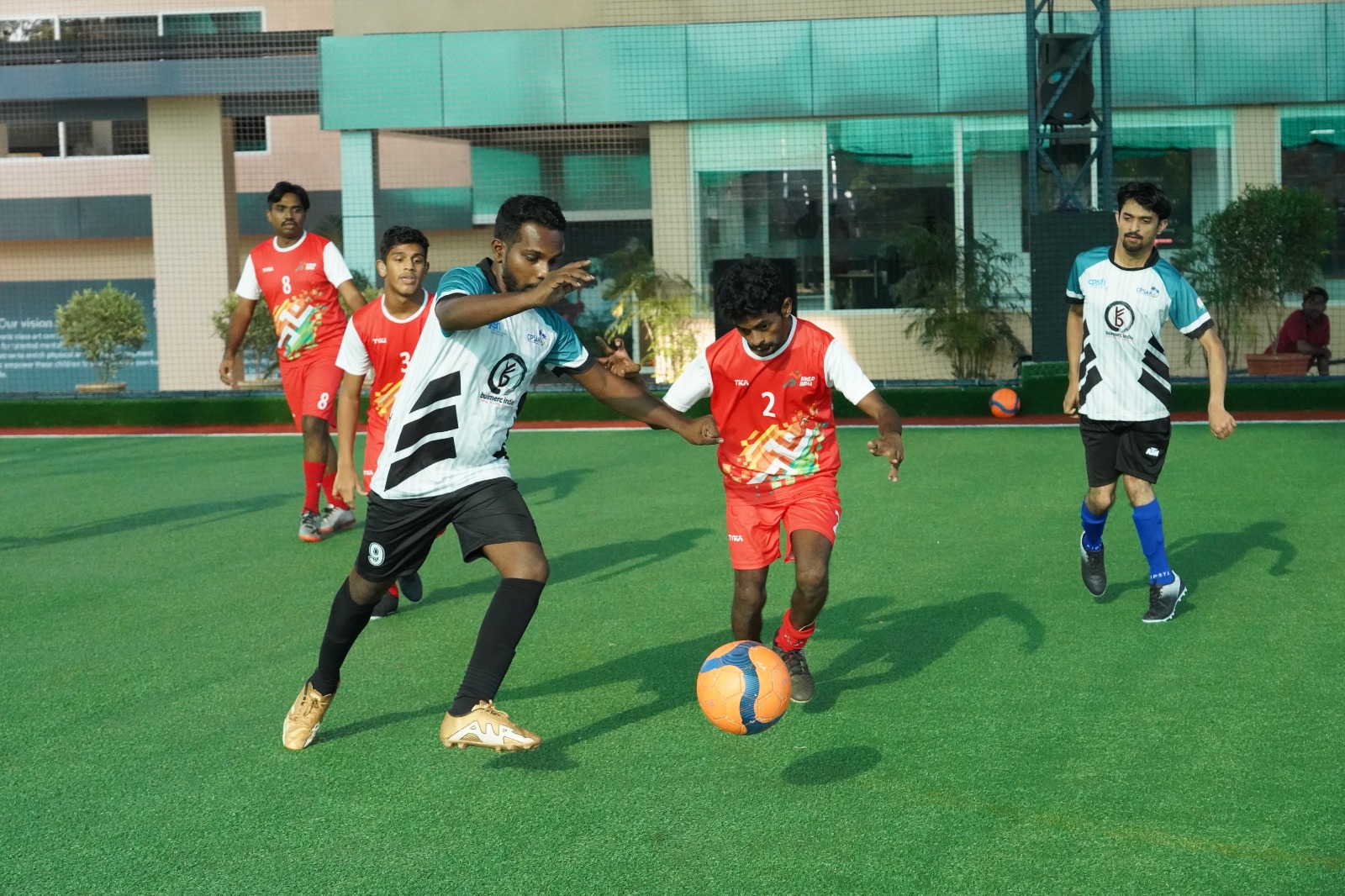
Different Art Centre has launched The Golden Goal project, aiming to empower differently-abled children through sports.
READ MORE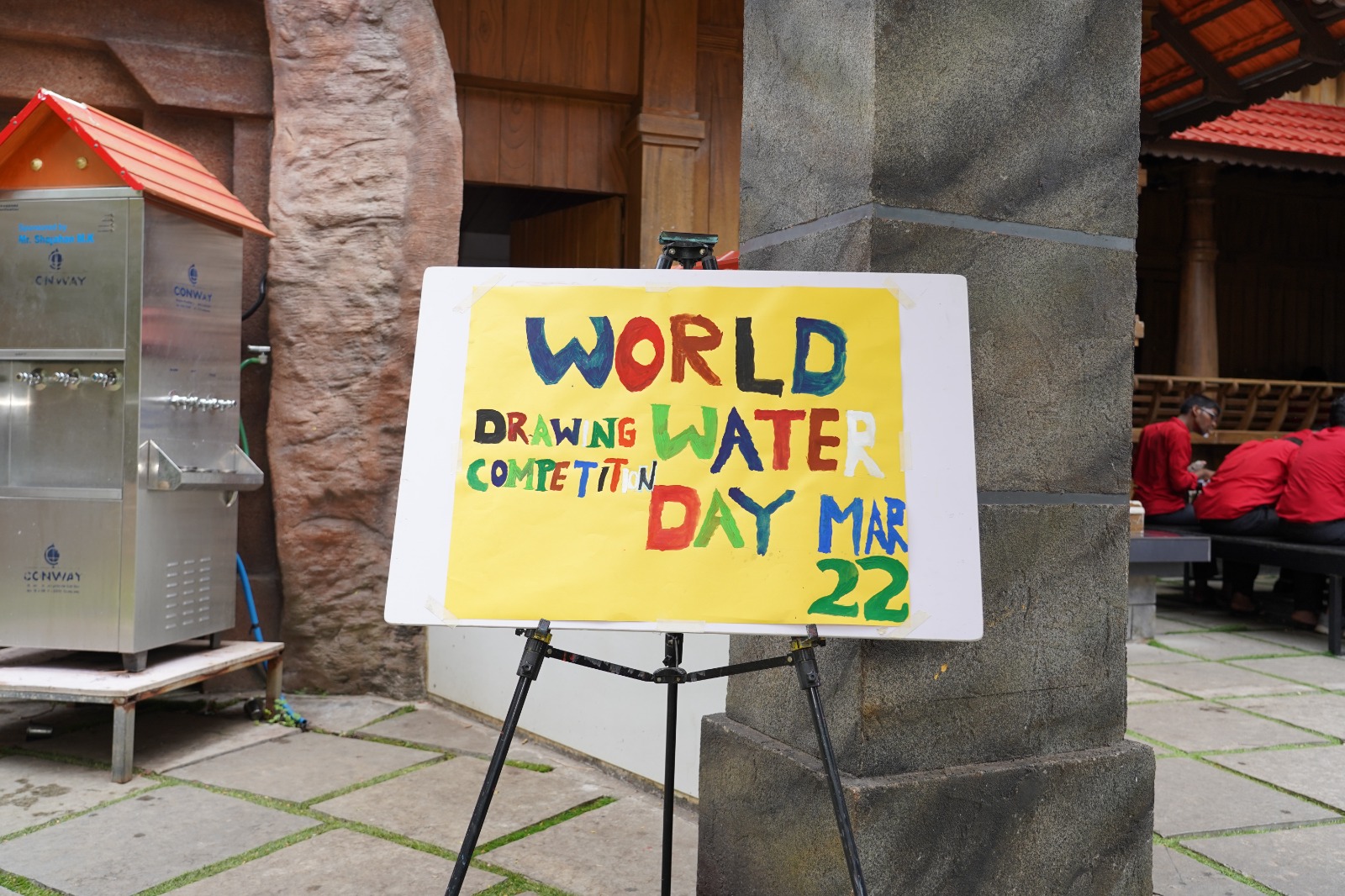
The World Water Day Celebration at Different Art Centre aims to draw people's attention toward the importance of water resources management and protection.
READ MORE